
Namibia
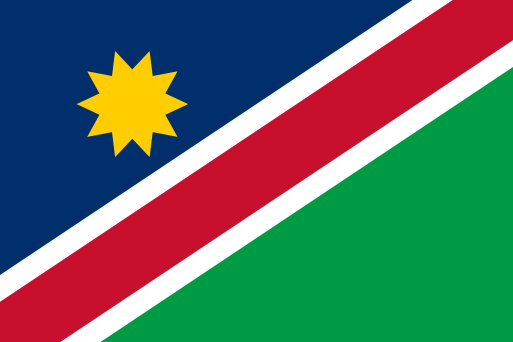 Namibia
Overview
Namibia has a population of approximately 3.2 million and a nominal GDP estimated at around US$17.31 billion, giving a GDP per capita of roughly US$5,057. Although Namibia's economic output is relatively small, accounting for about 0.2% of Africa's population and around 0.5% of its GDP, its relatively high GDP per capita masks significant income inequality and persistent gaps in access to public services.
Namibia's economy has traditionally been anchored by mining, particularly uranium and diamonds, rather than hydrocarbons. Uranium remains the country's largest export category, accounting for about 22.4% of exports in 2025, while petroleum products represented only around 3.8%. Namibia is currently the world's third-largest uranium producer, supported by major operations such as Rössing and Husab. However, the country's resource profile is changing rapidly following a series of major offshore oil discoveries in the Orange Basin, including TotalEnergies' Venus discovery, Shell's Graff and Jonker discoveries, and Galp's Mopane field. Together, these discoveries are estimated to contain more than 3 billion barrels of recoverable oil equivalent, potentially transforming Namibia into a significant oil producer over the next decade.
The scale of this emerging opportunity is particularly significant because Namibia is yet to establish a commercial oil production sector. Total Energies' Venus development is currently expected to reach a Final Investment Decision in 2026, with first oil potentially around 2029–2030 and production eventually reaching approximately 360,000 barrels per day. If developed as planned, the project could significantly increase the contribution of hydrocarbons to national output and accelerate economic growth through the early 2030s. At the same time, Namibia's near-term economy remains exposed to weaker mining performance, with GDP growth slowing to around 2% in the first quarter of 2026, following a contraction in mining output amid weaker diamond prices and lower gold production.
Namibia's energy outlook is therefore increasingly shaped by three emerging opportunities: offshore oil and gas, critical minerals, and green hydrogen. While oil could become a major new source of government revenue and export earnings, the country's US$10 billion Hyphen green hydrogen project reflects a parallel strategy to position Namibia as a regional energy and low-carbon industrial hub. This combination gives Namibia a distinctive energy profile: a mature mining economy preparing for its first major oil production while simultaneously investing in a longer-term renewable energy and green hydrogen industry.
Energy mix
Namibia's overall energy demand is relatively high by regional standards, at approximately 22.5 GJ per capita annually, or about 6,300 kWh per person. This relatively high energy footprint is largely associated with the country's mining sector, while petroleum products remain an important part of final energy consumption, particularly for transport and mining activities. Electricity consumption is estimated at around 1,171–1,220 kWh per capita, but domestic generation has historically been insufficient to meet demand, leaving Namibia structurally dependent on electricity imports.
Domestic generation has supplied only around 38% of total electricity consumption on average over the past 15 years, with the remainder sourced mainly through bilateral agreements and the Southern African Power Pool (SAPP). The domestic generation base is centered on hydropower, with the Ruacana Hydroelectric Power Station providing the largest share of local supply. Its output is influenced by rainfall conditions in its catchment area, while the smaller Van Eck coal-fired plant and Anixas and Paratus diesel stations provide supplementary and emergency generation. This leaves Namibia exposed to both seasonal fluctuations in hydro output and continued dependence on external electricity supply.
Solar power is emerging as the fastest-growing component of the country's generation mix. Installed solar capacity has reached around 170 MW across multiple projects, including the 20 MW Omburu Solar Plant and the 81 MW TeraSun Energy facility. A further 100 MW solar project at Rosh Pinah is also being developed, while the Modified Single Buyer Model is creating greater opportunities for Independent Power Producers to supply large consumers and distributors directly. These developments are gradually broadening Namibia's generation base beyond its traditional reliance on imported electricity and state-owned generation.
The gap between demand and domestic supply remains significant despite Namibia's strong solar and wind resources. Total installed capacity of roughly 650 MW remains below projected electricity requirements, which are expected to reach about 1,348 MW by 2030 under the National Integrated Resource Plan. The government's target of increasing domestic generation from around 38% of consumption to 80% by 2028 therefore represents a substantial shift in the country's energy outlook. Meeting this target will require continued investment in solar, wind, biomass and transmission infrastructure, while reducing the country's reliance on imported electricity.
Energy production by sector
The energy each sector produced, in Petajoules. This is production, not the electricity generation mix.
Each sector’s most recent figure, all from 2024.
Select a sector in the key to hide it.
An energy equivalent estimate. Each sector is converted to a common energy measure so the shares can be compared.
Not reported: Oil, Gas, Coal, Geothermal.
Policy landscape
OrganizationThis section requires the Organization plan.
Policy landscape: part of the Organization plan.
Compare plansStrategic national projects
OrganizationThis section requires the Organization plan.
Strategic national projects: part of the Organization plan.
Compare plansDataset
Figures reported for Namibia, one sector at a time.
The country dataset: part of the Organization plan.
Compare plans